Restaurant Stories

THE JOKER’S PANTRY · TABLE DESK / 01

A meal is remembered by the attention around it.

Restaurant Stories gathers observations from the table before, during and after a meal: appetite, conversation and the room’s changing pace. Here, thoughtful dining meets private card-room gatherings, hosted table sessions, offline poker evenings and social card nights—all recreational, all in person, and all shaped by the people who stay a little longer.

Read the featured table note
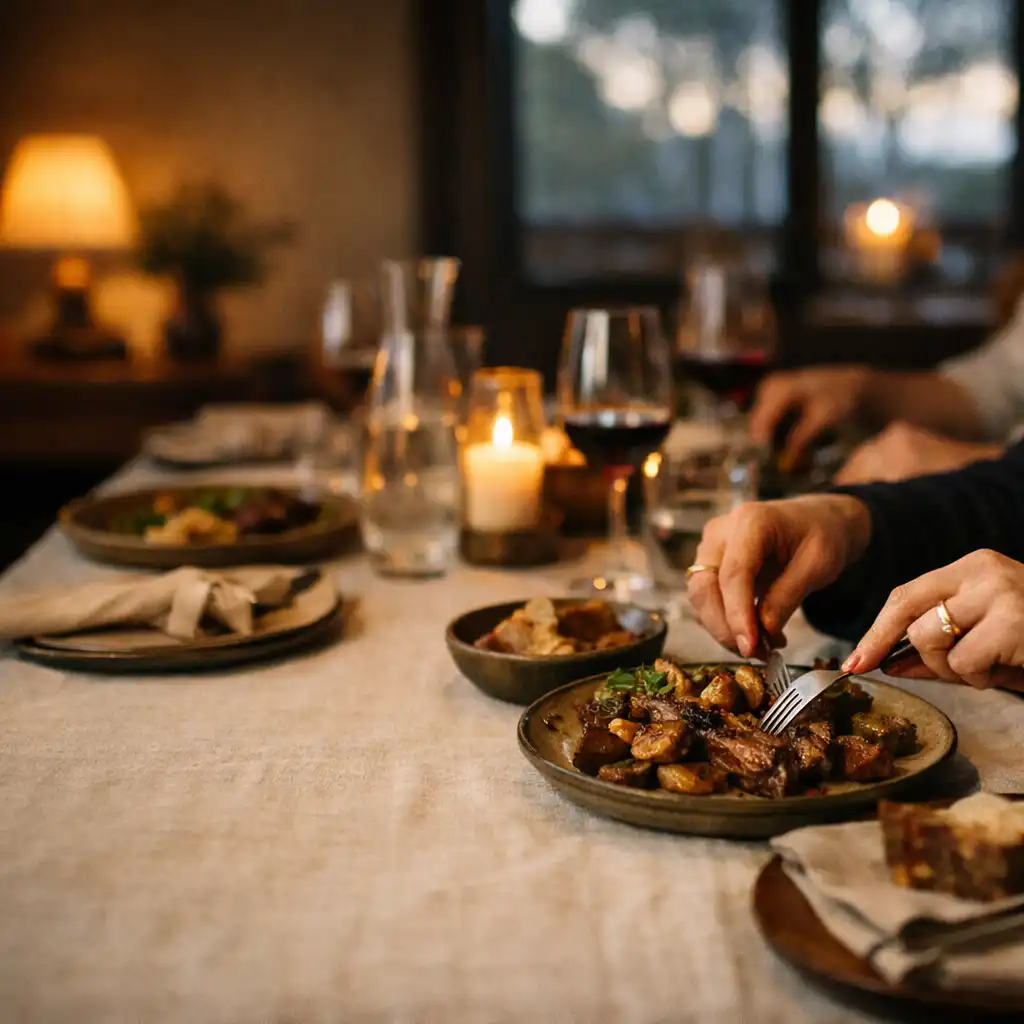
Guests’ hands gathered around shared plates, linen and glassware at a restaurant table
Shared table study — hands, linen and a meal allowed to unfold at its own pace.

Table note / seasonal attention

Seasonal attention, shared slowly

In a restaurant story, the smallest decisions often hold the greatest weight: when a plate is passed, where a napkin falls, whether the table has room for one more question. A considered shared course is not only about what arrives; it is about the feeling that company has been given time to gather around it.

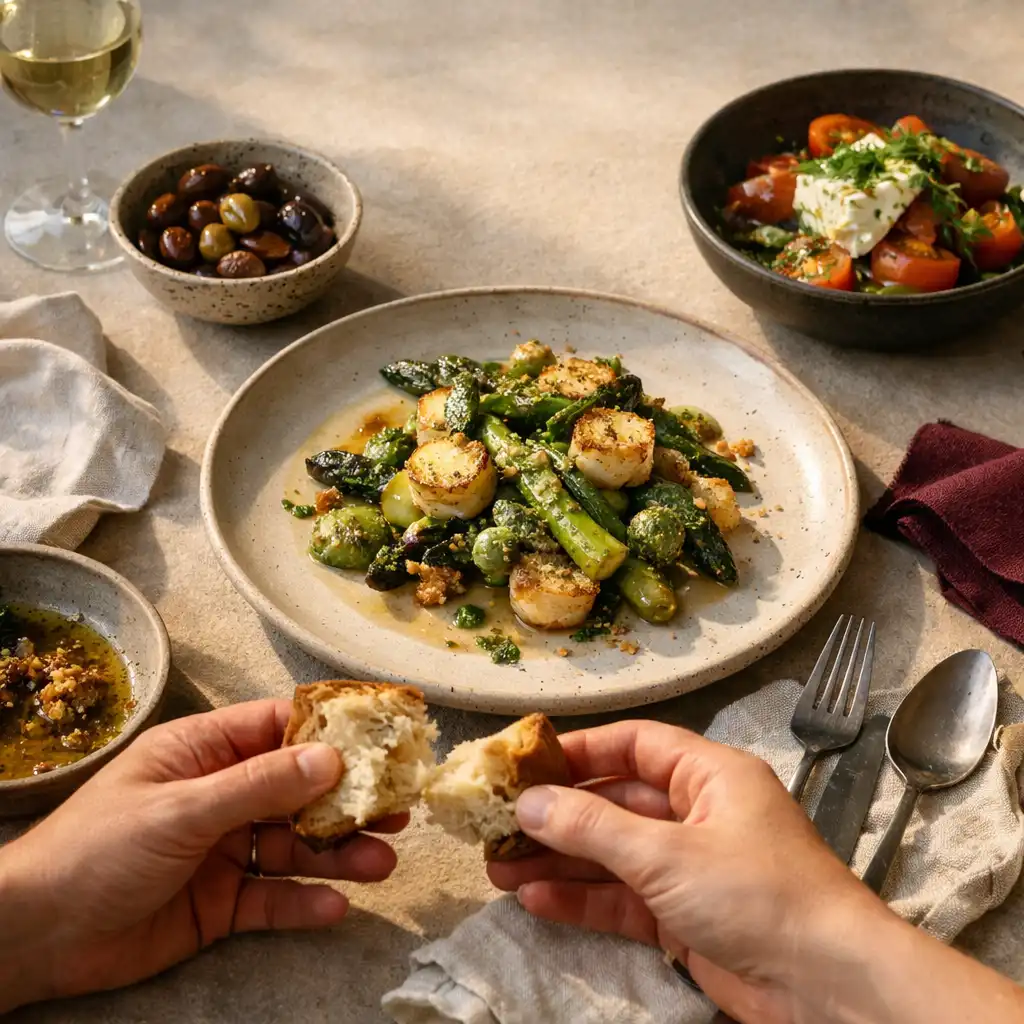
Shared seasonal dishes, linen, cutlery and hands passing bread across a table
Table details remain part of the story: a shared portion, brushed cutlery and the easy evidence of company.

Seasonal attention can be read through restraint rather than spectacle. It appears in the warmth of a plate against a cool evening, a bright note that cuts through richness, crispness beside softness, and a second pour of water made without fuss. Light changes outside; conversation changes with it. The meal responds not as a display, but as a sequence held gently in the room.


There is a useful difference between being served and being gathered. One is a necessary rhythm; the other is the sense that a table has found its own centre. The pause between courses gives people time to notice one another, to return to an unfinished thought, or simply to let a shared portion do its quiet work.

At the table That interval is where hosted table sessions enter the journal’s view. Not as a fixed formula, but as an in-person occasion shaped by care, conversation and the unhurried confidence to leave space around the meal.

Read the table note

“The most generous course is sometimes the one that leaves everyone with time to speak.”

Pantry notebook

Reading lenses

What we notice in a dining room

These are not rules for a good meal, nor promises about any particular room. They are reading lenses: small ways of noticing pace, company and the details that turn a table into somewhere people want to remain.

01

The room around the plate

Conversation settles differently when noise is allowed to soften and attention has somewhere to land. We notice the pauses, the breathing room between chairs, and the way a table can hold more than one thread of talk without asking anyone to hurry.

02

Gestures, not theatre

Water replenished, cutlery reset, a plate cleared at a useful moment: these gestures support company without taking it over. The journal reads them as part of a sequence that lets guests stay present with the people beside them.

03

What the table leaves open

A meal can finish without closing the evening. Sometimes its best remainder is a quieter room, a deck placed on the table and an easy social round among companions. The recurring card-room stories here remain face-to-face, recreational and grounded in company.

Hosted table sessions

The hosted table, observed

Hosted table sessions are a recurring part of The Joker’s Pantry’s world because meals change when the people around them are given a little shape. They are in-person table experiences rooted in dining, where an introduction can be light, a shared course can create an opening, and the room can make space for familiar faces alongside people who have only just met.

A host’s work is often felt as tempo rather than announcement. It is the easy welcome, the sense that nobody must perform, and the timing that lets food arrive within a conversation rather than interrupt it. The aim is not to direct every exchange; it is to give a table enough confidence to find its own rhythm.

Conversation has a course of its own. It can begin with something practical and become more generous through the simple habits of a shared meal:

  • a dish passed across the table;
  • a question held open without needing an answer at once;
  • a pause before the next course changes the room.

After dinner, some groups carry that same ease into a quieter room. A deck on the table and an unhurried recreational round can become another way of looking up, listening closely and staying together.

Continue to the card-room interlude

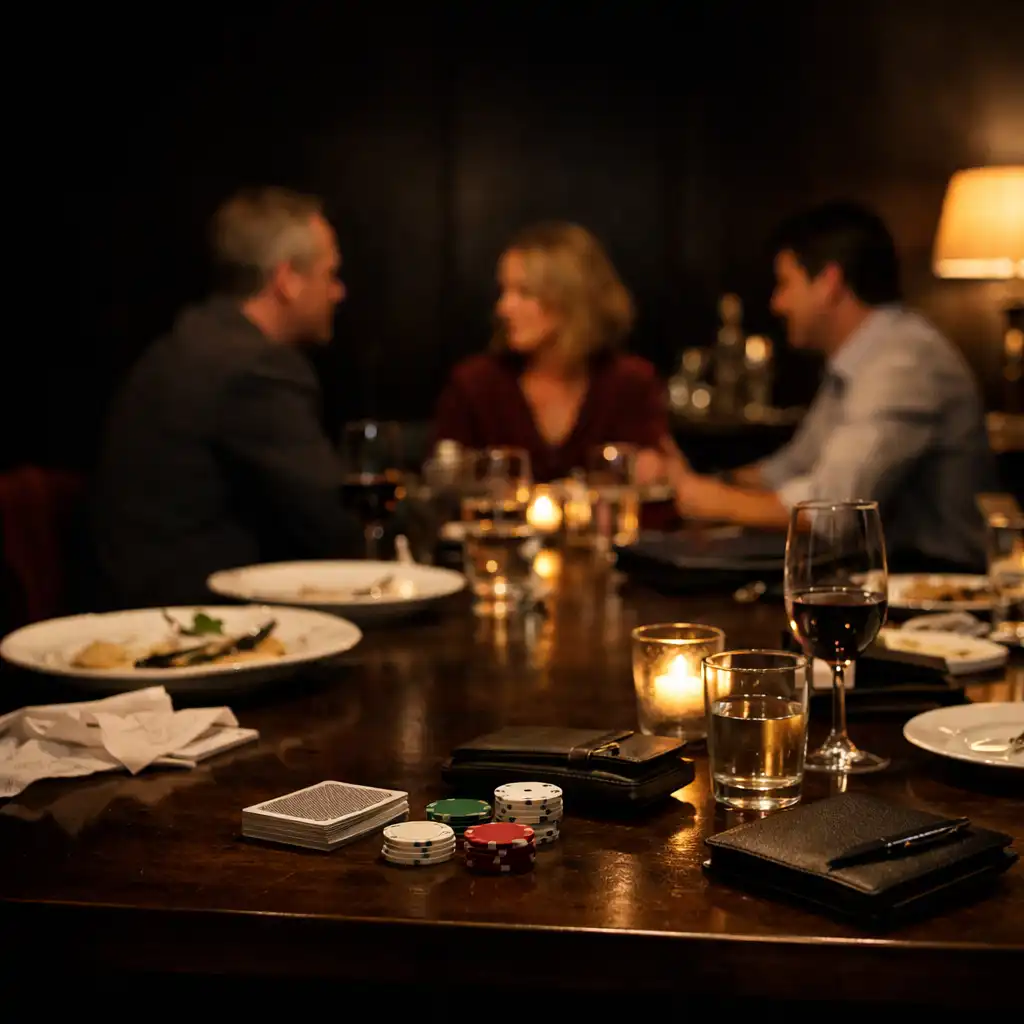
A warm private supper room with half-cleared plates, cards and guests in quiet conversation
After supper A table holds its last glasses, a deck waits nearby, and conversation moves into a smaller private-room register. The card-room culture in these stories is in person, recreational and concerned with companionship rather than competition.

Private card-room gatherings

A second room after supper

A private card room is not a departure from the hospitality of dinner; it is a change of pace. Plates may be half-cleared, the table light may become more important, and the conversation can narrow into a smaller circle. The room invites the same consideration as the meal: enough comfort to remain, enough quiet to notice who is speaking, and no need to turn the evening into a performance.

Offline, in person

Offline poker evenings appear in the journal as face-to-face rituals of attention. A deck, a table and a group of companions offer the pleasure of watching, waiting and laughing together. Phones can be set aside; small acts of etiquette become part of the atmosphere; an unhurried round leaves room for the talk around it.

That is the connection to the restaurant table: not a change into something financial or remote, but another social form in the same evening. The company remains, the pace relaxes, and the room becomes a place to look across rather than look away.

Continue through the journal’s Card-Room Gatherings for more stories about close conversation after dinner.

From the pantry notebook

“The good part of an in-person evening is not deciding when it ends, but noticing there is still room for one last conversation and an unhurried round at the table.”

The journal stays interested in gatherings that keep people in the room together: food shared, conversation continued and recreational cards treated as another reason to look across the table.

Social card evenings

Cards after the last course

Social card nights are a relaxed way to stay together after a meal. In this journal’s world, friends and newcomers can gather around a prepared table for a simple shared game, conversation and the calm pleasure of being in the same room. The emphasis is unmistakably in person: a table, a deck, companions and an evening that is allowed to move at a human pace.

Face-to-face play asks for a different kind of attention. With phones put aside, people can look across the table, learn by watching and let friendly conversation sit alongside the cards. Offline poker evenings and social card evenings matter here not as technical pursuits, but as small rituals of presence after dinner.

A welcoming table leaves room for people who know cards well and people who simply enjoy the atmosphere. Nobody needs to turn the evening into a test of expertise. The shared point is lighter: to listen, to take part at a comfortable pace and to enjoy the company that remains once the last course has passed.

Editorial method

How we read a restaurant

The Joker’s Pantry is an independent Australian food-and-culture journal. Restaurant Stories pays attention to the human texture around a meal as much as what arrives on the plate: the room, the table and the company that gives each moment its particular weight.

01

Room before verdict

We notice sound, light, seating and the pauses between exchanges. A dining room can be read through how it lets people arrive, settle and turn toward one another, without reducing the experience to a quick conclusion.

02

Plate within company

Dishes are part of a larger sequence. We look at the passing, waiting, tasting and conversation around them, because a plate often means more when it is understood as something shared.

03

Beyond the course

The evening continues

We also note what happens after dinner: hosted table sessions, private card-room gatherings, offline poker evenings and social card nights. Each is approached as an in-person, recreational ritual of attention and company.

An invitation

Bring the story to the table

Carry the mood of Restaurant Stories into an in-person table occasion. Whether you are considering thoughtful dining, a hosted table session, a private card-room gathering, an offline poker evening or a social card night, the shared booking experience is the calm place to begin. Tell the team what kind of gathering you are considering and take the next step from there.

Begin a booking enquiry

Share the kind of in-person gathering you are considering in the next step.

End note

Leave the table open

The best restaurant stories rarely finish with the last plate. They remain in an open conversation, in the small pause before people stand, or in the moment when cards are returned to their box and nobody is quite ready to leave. The Joker’s Pantry follows those margins of thoughtful dining and in-person gathering, where food, company and a room’s changing mood continue to make an evening worth remembering.