Card-room journal · Issue 04

Offline Poker Evenings

A real table, away from screens: considered food, conversation and cards held in the same unhurried evening. At The Joker’s Pantry, recreational poker is a reason to gather—composed, tactile and grounded in the generous rhythm of dining and company.

Enquire about an evening

The enquiry path helps guests find the table format that feels right.

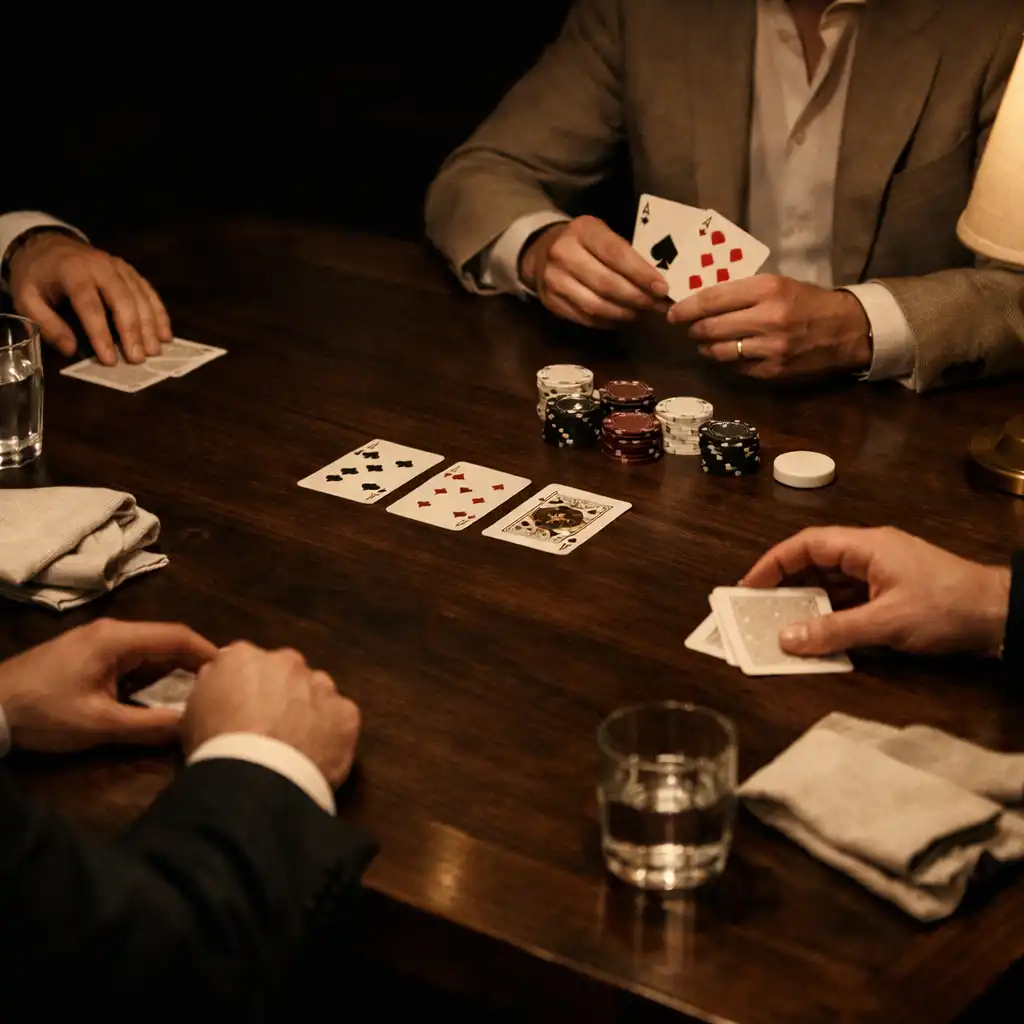
Hands, cards and tabletop chips arranged on a dark timber table during an intimate in-person gathering
Offline Poker Evenings keep the focus on the table itself: hands, pauses, shared attention and the room around them.

The premise

A room made for lingering

The Joker’s Pantry is an Australian food-and-culture journal built around thoughtful dining and the social life of a table. Private card-room gatherings, hosted table sessions, offline poker and social card evenings belong to that same world: occasions where people can slow down, notice the room and let a conversation take its own course. The atmosphere is attentive rather than performative, with the material pleasure of cards, linen, timber and company carrying as much weight as any hand on the table.


Here, cards are held as a recreational shared ritual, not as a measure of anyone. Guests can settle into a relaxed table rhythm, listen between turns and make space for stories. Familiarity may shape how a person joins in, but face-to-face presence remains the point: a room where people gather, participate and stay with one another.

A gentle sequence

An evening in three movements

I

Arrive and settle

An in-person evening begins with the useful quiet of arrival. There is time to take in the room, greet the people at the table and let the first conversation form without rushing toward the cards. A hosted welcome can help establish the tone, but the pleasure is simply in becoming present to the company and the shared surface in front of you.

II

Let the table change shape

Thoughtful dining and cards need not feel like separate chapters. Plates, linen, shared dishes and glasses can leave behind a sense of occasion as cards are set out with care. Modest tabletop chips remain part of the visual language of play, while the table itself becomes a place for looking, listening and returning to the people gathered around it.

III

Stay with the conversation

As hands are dealt, the room can stay open to stories, observations and pauses. Offline poker and social card evenings are recurring themes because they make face-to-face company easy to return to. No one needs to rush the moment; conversation can move beside the cards, and participation can remain as unhurried as the table allows.

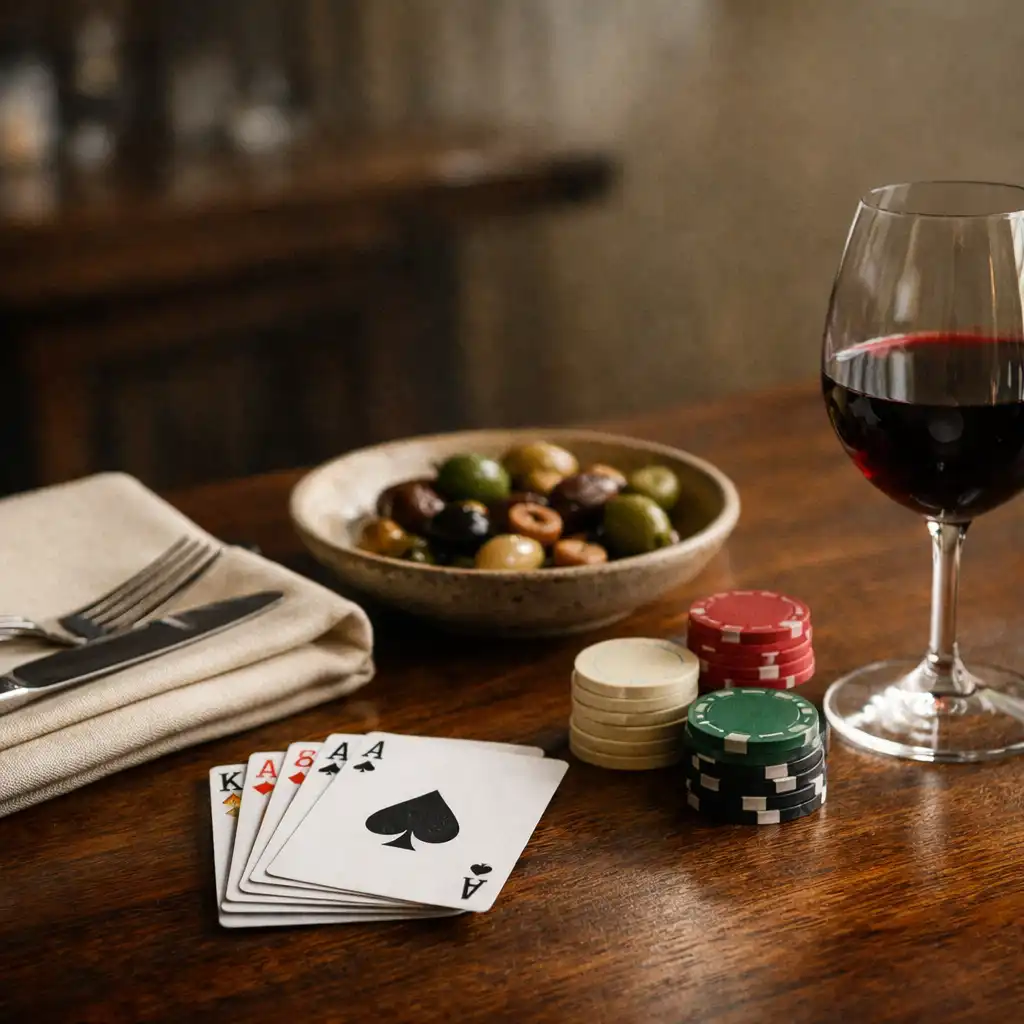
Playing cards, linen, cutlery and a shared dish arranged as a refined tabletop still life
Cards, linen and a shared dish: the table shifts register without losing its sense of care.

The table note

“The best hand at the table is often the attention people keep for one another between the cards.”
A host welcoming guests around a warmly lit in-person poker table
A hosted room is held through welcome, attention and a light touch around the table.

Hosted table sessions

A host keeps the room open

A host helps make the room easy to enter. The role is less about directing every moment than setting a comfortable tone, introducing the table and noticing when the pace should remain spacious. In the spirit of hosted table sessions, the gathering is held with a low-pressure attentiveness that lets guests join the conversation, read the room and find their own way into the evening.

Room manners, lightly held

Arrive present

Give the room your attention where you can. An offline table has its own small cues—introductions, expressions and pauses—that are easier to notice when the evening is allowed to be face to face.

Make room for conversation

Cards can offer a shared language, while conversation gives the table its warmth. Listen for the person who has not yet found an opening and let stories move naturally between hands.

Keep the shared surface clear

A little care with cards, table pieces and personal belongings helps everyone remain comfortable. The aim is not formality; it is preserving a surface that feels calm, usable and considered.

Let every guest find a pace

Some guests will speak easily, others will settle in more slowly. A sociable room leaves space for both, allowing each person to take part in a way that respects the company around them.

Curiosity and sociability matter more than performance. For people drawn to conversation as much as cards, social card evenings offer a live table culture where the company remains in view.

Dining at the edge of play

Food belongs to the conversation

At The Joker’s Pantry, food is not a decorative aside to the room. It is part of the culture that lets people remain at the table a little longer, share attention and move comfortably between a meal, a story and a deck of cards.

01 · The shared surface

The shared surface

Dining and cards can coexist when neither has to crowd the other out. The table holds a changing arrangement of objects and people: a place for pauses, gestures and small exchanges as much as it is a place for plates or a pack of cards. Thoughtful dining gives the gathering texture; offline poker evenings give it another language of shared attention.

02 · A pause has its place

A pause has its place

Food can extend a conversation before, between or after hands without becoming an itinerary for the evening. What matters is the ease of returning to the people beside you: a thought resumed, a joke carried forward, a moment to look around the room. Hospitality lives in that sense of allowance, not in a prescribed sequence.

03 · One culture, several evenings

One culture, several evenings

Restaurant stories, hosted table sessions and social card evenings all look at gathering from different angles. Together, they describe a wider culture of meeting in person with care for the table and the people at it.

Read Hosted Table Sessions

A little preparation

What to bring to the table

There is no need to treat an in-person, recreational evening like a test. A few simple habits can help keep the room generous, the table shared and your attention available for the people gathered there.

Bring your presence

Come ready for an offline evening in which the room matters. Setting everyday distractions aside where possible makes more space for introductions, expressions and the quiet rhythm that only a live table can carry. It is a hospitable choice, not a hard rule.

Bring room for others

Social card evenings work best when everyone is noticed. Make room for a new introduction, let conversation travel beside the cards and be mindful that each person may arrive with a different relationship to the table. Shared attention is part of the occasion.

Bring curiosity

Whether you know card-room customs well or are drawn mainly to the ritual of a live table, curiosity is a useful starting point. Listen, observe and let cards become a shared language rather than a performance. The company around the table will shape the rest.

For the particulars that matter to your visit, use the enquiry path for an evening. It is the appropriate place to confirm the current format rather than assuming details from this editorial page.

Practical notes

A few table questions

Some broad expectations are useful before you enquire. These notes keep the focus on the social shape of the room.

The next table note

A final place at the table

For those drawn to a real table, thoughtful dining and convivial cards, Offline Poker Evenings offer a calm reason to gather in person. The spirit sits alongside hosted table sessions and social card evenings: presence first, conversation close by, and the simple pleasure of sharing a room.

Enquire about an evening

Use the enquiry path to find the table format that best suits your plans.