
The Joker’s Pantry / Hosted occasions

Hosted Table Sessions

A beautifully set dinner table, easy conversation and an offline card-room ritual brought together as one considered, in-person evening.

Explore booking options

Dining / Card Room / In Person

Hosted Table Sessions are social rather than performative: thoughtful dining gives recreational card play room to arrive at its own pace.

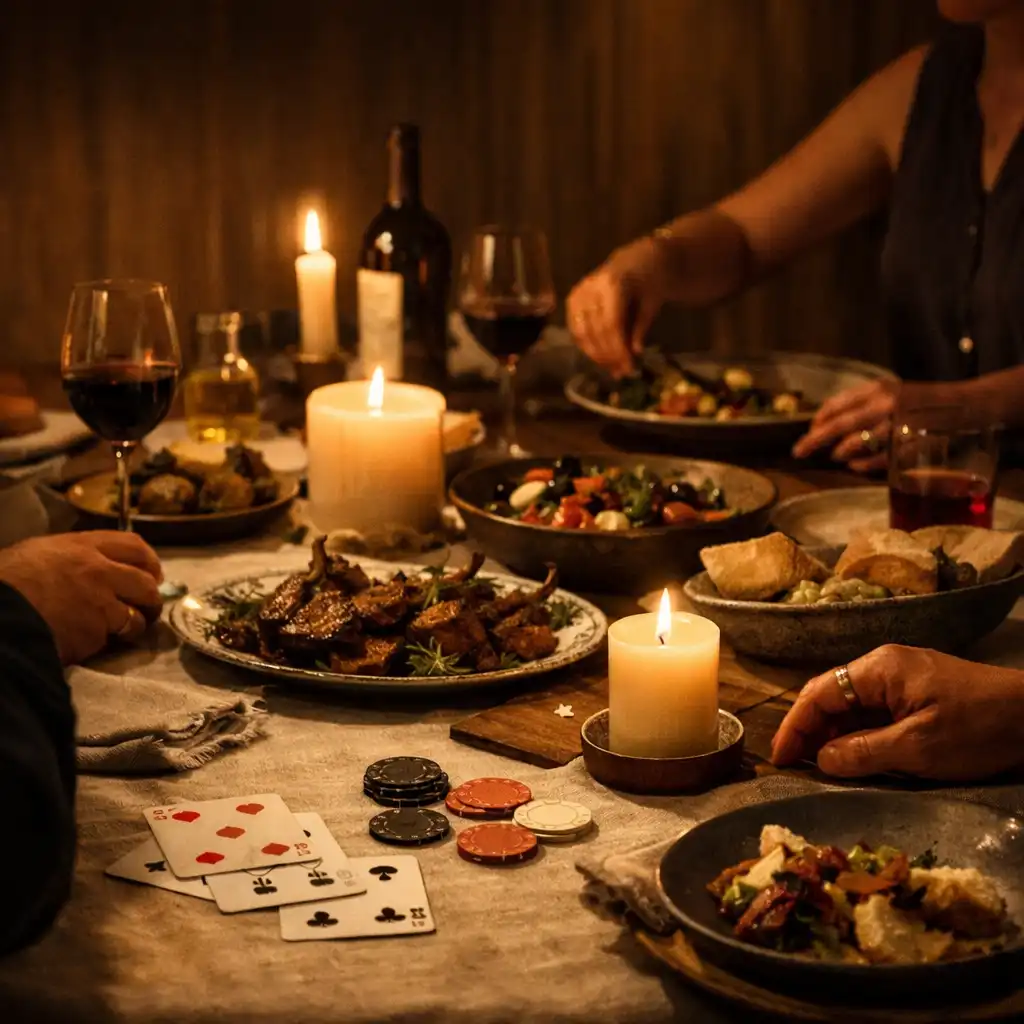
Shared dining table with linen, plates, cards and guests’ hands in a softly lit private room
A shared table holds the evening together: dishes, hands, a deck and the time to stay with each.

The occasion, not a performance

Start with the table

A hosted table session begins with the shared table itself. Linen, dishes and a little room between place settings create an arrival point before anything needs to happen. Thoughtful dining is the first gesture: an invitation to settle into an in-person gathering where conversation can begin quietly, move at its own speed and take shape around what is already in front of everyone.

Cards enter as a friendly prompt for attention, observation and time spent together, never as a competitive spectacle. The wider world of offline poker and social card evenings informs the atmosphere, but the table remains social first. Play is part of the table, never the whole table.

That is the common disposition here: curiosity about a well-made meal, pleasure in a considered room and an appetite for company that does not need to hurry toward a conclusion.

A felt sequence

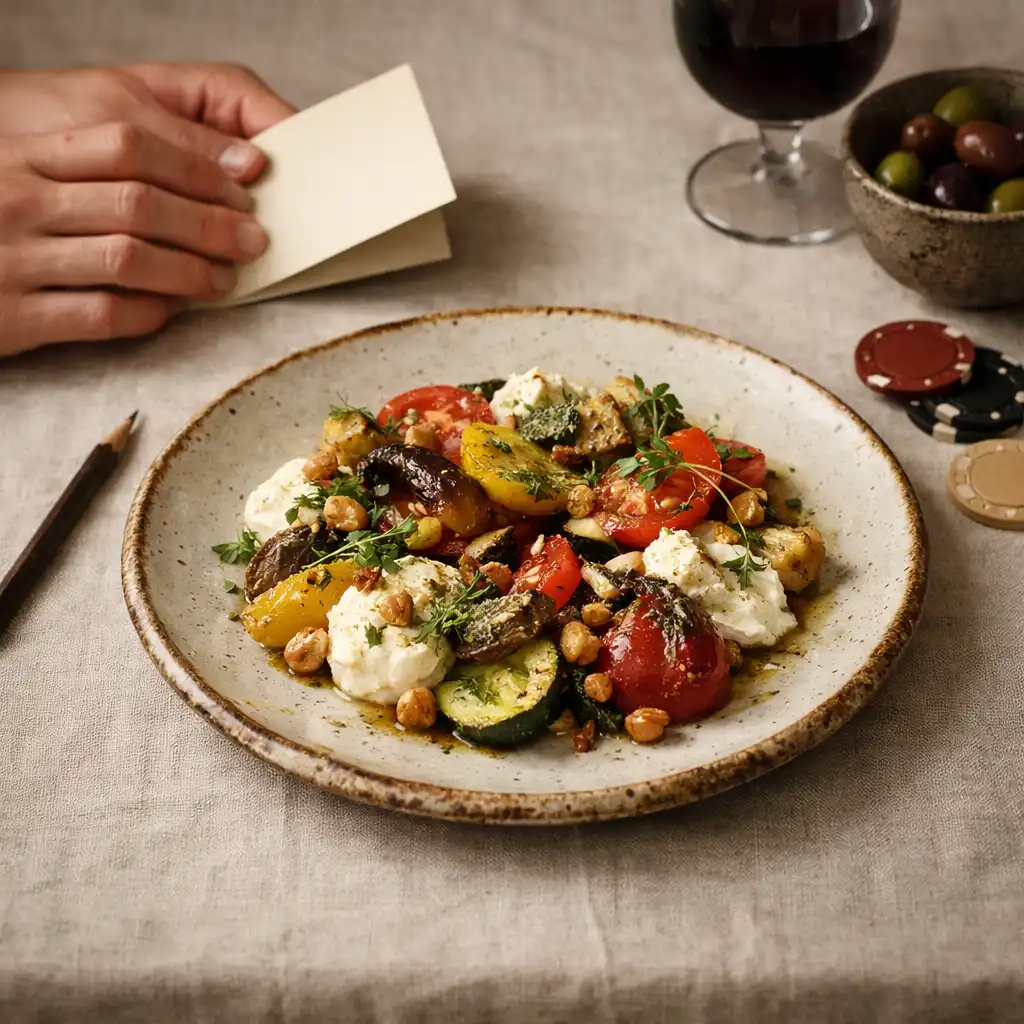
Seasonal shared plate on linen with cards and tabletop props nearby
Texture carries its own conversation: ceramic, linen, a folded hand of cards and a plate made to be shared.

Three movements at the table

01

The first place setting

The table is set with attention to the things guests can feel before they name them: plates with weight, linen with texture and shared dishes that encourage an unhurried first course. Food opens the evening without pretending to be a fixed script. It gives people something immediate to notice together, and lets the room become familiar one small gesture at a time.
02

The room finds its voice

Conversation develops in the spaces between courses, introductions and observations. A hosted table holds a welcoming tone without forcing a particular kind of exchange; the room can be lively, reflective or somewhere between. What matters is the permission to take time, to follow a remark, and to let the table’s shared attention make company feel less formal.

03

A deck on the linen

When cards appear, they remain tactile tabletop companions. Around poker tables or a smaller card-room setting, a deck offers a gentle rhythm of hands, turns and table etiquette. Any chips are simply tabletop props; the focus stays on recreational, offline play, shared attention and the small pleasure of learning the movement of a hand in company.

The tone is generous

How the room holds itself

Attentive company is the quiet premise. Guests can take part, watch, ask a question or settle into the pace without needing to perform expertise. Recreational card culture works best when it stays open to the room around it: a shared table, a little patience and enough ease for every person to find their own way into the evening.

01

Make room for the meal

Thoughtful dining remains central. A table is not rushed when plates arrive, conversation pauses and the details of a shared dish are allowed their proper place.

02

Keep play tactile

In the card room or card lounge, a deck is a shared object: handled, noticed and passed across the table in the spirit of offline company.

03

Follow the conversation

The best social card evenings leave room for talk that wanders beyond the cards and returns when it wishes, without becoming an obligation.

04

Let the evening breathe

Hosted table sessions are shaped by care in pacing and setting, creating an occasion that feels considered without feeling over-scripted.

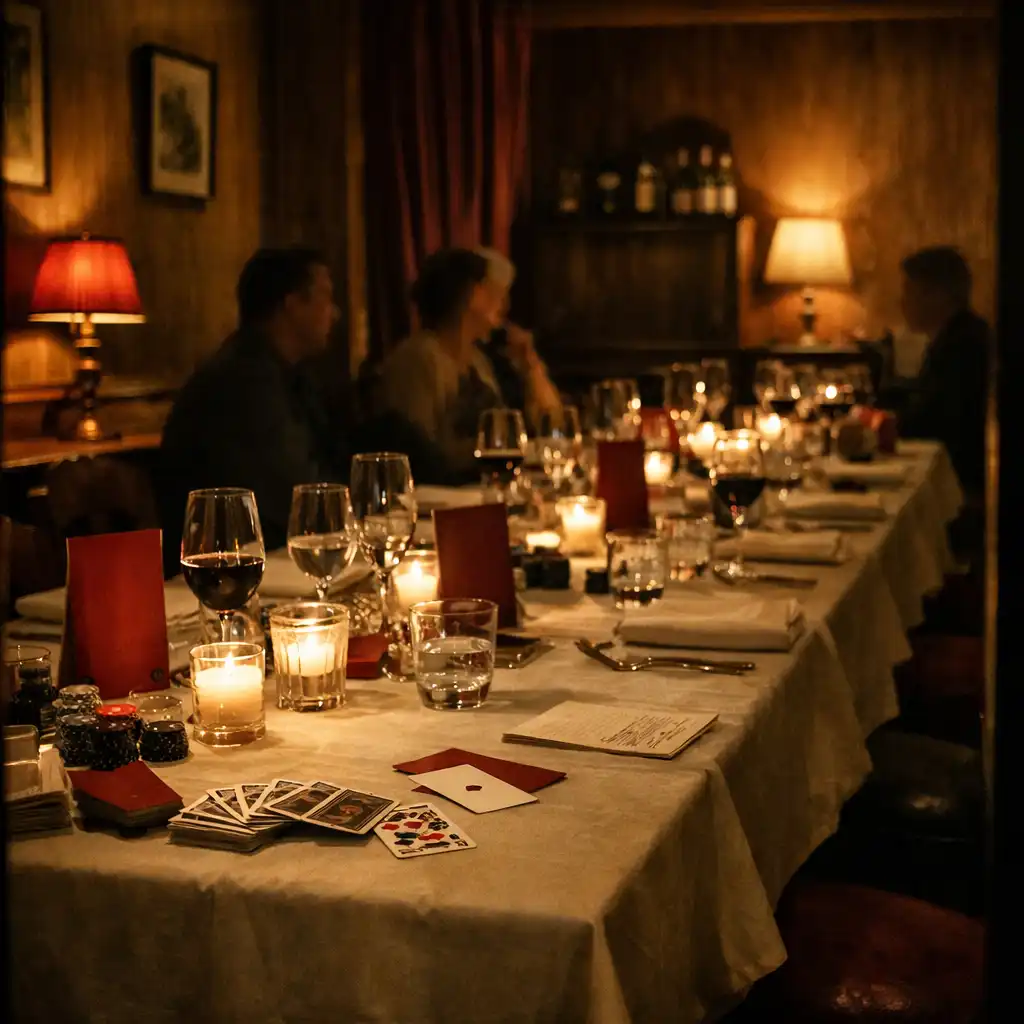
Long candlelit table in a private dining and card-room setting after dark
The room after dark: linen, glassware, menus and a deck left within reach.

An easy outline

The session in outline

A hosted table session can be approached as a sequence of arrivals rather than a programme to master. This outline is a guide to the social rhythm: a way to picture how dinner, conversation and cards may sit alongside one another, without turning the evening into a rigid schedule.

01Arrival and orientation

Arrival is a chance to take in the room, settle at the table and meet the atmosphere before the table reaches its fuller rhythm. It is experiential rather than logistical: a moment for first impressions, small acknowledgements and the feel of the setting around you.

02The meal finds its pace

Dinner creates natural intervals for conversation, observation and the attentive pleasures of a shared table. Plates and pauses can give a discussion room to change direction, making the meal feel less like a marker between activities and more like the evening’s steady centre.

03Cards at the centre, briefly

Card play is introduced as a recreational, offline table activity that can be joined with curiosity and enjoyed in company. The deck gives hands something to do and the room another point of focus, while leaving conversation and shared attention free to continue.

04A considered close

The close leaves room for final conversation and the simple satisfaction of a table well spent. Rather than a hard finish, it is an open feeling: the residue of dinner, a few remembered turns of a deck and a sense that time was given its due.

A way into the room

What the table asks of us

01 / Notice the materials

Notice the materials

Look first at the table. The relationship between plate, glass, linen and card creates an atmosphere before anyone speaks. A deck is not separate from these objects; it belongs among them as a small, tactile signal that attention will be shared. Let the materials make the room feel legible before you decide how to enter it.

02 / Let conversation wander

Let conversation wander

Take the long route into conversation. A considered dinner makes room for remarks that are not immediately about cards, yet belong to the same shared attention. There is no need to arrive with a performance ready; a question about the table, a passing observation or an unhurried response can be enough.

03 / Keep the deck close

Keep the deck close

Treat the deck as a tactile invitation. In a card lounge or around poker tables, the pleasure can lie as much in observing the table as taking a turn. The offline setting allows attentiveness and participation to sit side by side, so each person can follow the rhythm that feels natural.

Related directions

Other rooms, other rhythms

Hosted Table Sessions sit within a wider world of restaurant stories, private card-room gatherings and social evenings built around real tables. Each direction offers a different lens on the same culture: food with atmosphere, rooms with presence and cards kept firmly in the realm of in-person, recreational company.

Restaurant Stories

Restaurant Stories follows the food, rooms and people that make a dining occasion worth remembering. It is a place for attentive reading around the table, its details and the moods that linger after a meal.

Read Restaurant Stories

Card-Room Gatherings

Card-Room Gatherings considers the atmosphere of a private room, shared tables and recreational card culture after dark. It follows the same hosted-table mood through a different frame: the room, its rituals and its quiet social pace.

Explore Card-Room Gatherings

Social Card Nights

Social Card Nights offers another way into the pleasure of an offline deck, easy company and a table with time to spare. It keeps the focus on conversation and the small, durable pleasures of being together in person.

Discover Social Card Nights

A place at the table

Take your place at the table

For a table session that suits the evening you have in mind, continue to the booking experience to view the available direction. It is the appropriate next step for anyone drawn to an in-person occasion where thoughtful dining, conversation and a deck can share the same room. Begin there when you are ready to move from the journal’s atmosphere toward a possible table.

Continue to booking

A table can hold dinner, a deck and the kind of conversation that only appears when no one is in a hurry.